
Is it just me or is soup season the greatest time of year? And with any great soup recipe usually comes the need for broth and/or stock. In the last year, I have transitioned from buying vegetable broth in plastic-coated cartons to buying it in aluminum cans instead since metal has a much better track record of recycling. As of even more recently, I learned how to make broth at home using ingredients I already have, creating absolutely zero waste and costing almost no money – doesn’t really get any better than that!
We eat a lot of vegetables in our house which means we end up with lots of veggies scraps – the outside layers of onions, leafy ends of celery stalks, and the peels of carrots are just a few things that we have previously thrown straight into the compost bin while preparing meals. Now, I save these items in a large food storage bin in the freezer. I accumulated these veggie scraps for about a month, and once the container was full, I made lemonade out of lemons! (Just kidding, although that sounds like another blog post waiting to happen) Here’s how I make my own vegetable broth:
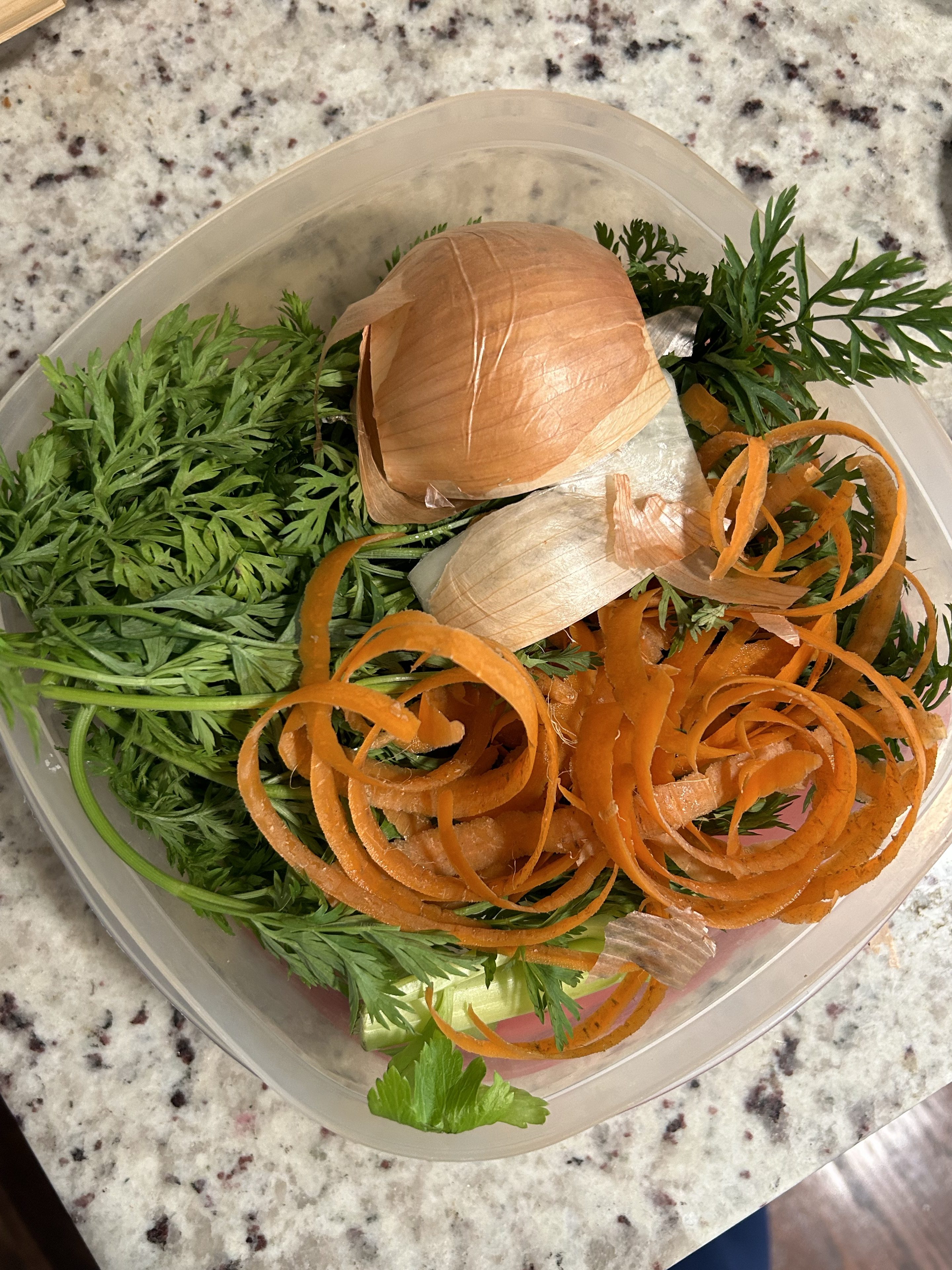
Step 1: Add veggies and seasoning
The container I used for my veggie scraps was about 6-8 cups worth of vegetables. You could use more or less and that’s the beauty of making your own – it doesn’t have to be exact. I like to stick to carrots, celery, and onions. Any cruciferous vegetables, like cabbage and broccoli, will leave your broth with a bitter taste. And some other vegetable won’t add enough flavor to make it worth it. Here’s a link to a great comprehensive guide on which vegetables to include or exclude.
Make sure to rinse them all off with water, the scraps of vegetables are likely to be parts that still have dirt or seeds on them which you don’t want in your broth. Then throw them all into the stock pot along with any herbs or spices you want to use. I used fresh parsley from my indoor herb garden along with dried basil and oregano plus plenty of salt and pepper.
Step 2: Add water
Add water to the stock pot and measure with your heart. I fill up my pot until there’s about 4-6 inches left in the pot with no liquid.
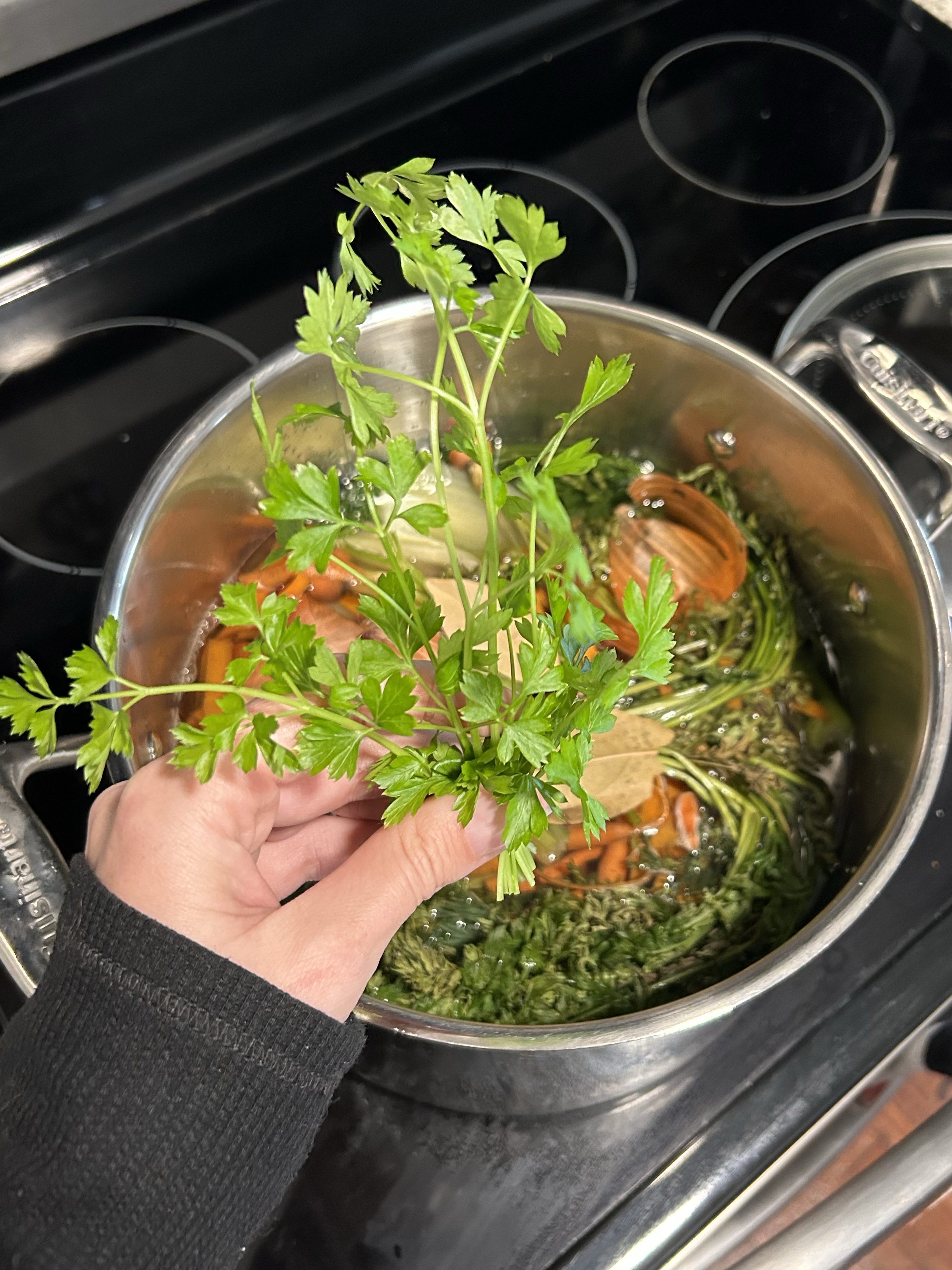
Step 3: Crank up the heat
You might not actually need to start it off on high heat but I like to get a rolling boil going before I turn it down to a simmer. Then we wait! Depending on how much flavor you want in your broth, you can simmer for as little as an hour or so. I like to keep mine going for a couple of hours to really soak up all the flavors.
Step 4: Drain then serve, store, or freeze
Let the broth cool then drain the broth from the vegetables. If you don’t have a use for it right away you can save it in the refrigerator for about 5 days. This process makes quite a lot of broth so I like to save some in the refrigerator and then freeze the rest. When I freeze it, I measure it out in 2 or 3 cup increments and put them in separate containers so, when I’m ready to use it, I can just take out the amount that I want to use. This is also a great use for old takeout containers. As long as you freeze it in an airtight container, it should keep for a long, long time!
Step 5: Compost the veggies
Once your broth is all stored away for future use, all that’s left are those veggie scraps. They can still go into the compost, just like we would have done with them previously, but now you’ve gotten another use out of them before they continue onto the next phase of their life.

And it’s as simple as that! Vegetable scraps, water, and seasonings – all things you already have and cost little to no money.
If the recipe you’re making calls for vegetable stock instead of vegetable broth, you can still follow all of the exact steps above removing only the part where you add herbs and spices. The difference between broth and stock is simply that broth is seasoned and stock is not.
Even if soup isn’t your thing, vegetable broth can be used for lots of other things! If you make your own sauces at home, many of those will use broth or stock. You can also use broth instead of water to make rice, couscous, quinoa, etc to add some extra flavor. Whatever you use it for, you can feel good about knowing you made it yourself and were resourceful instead of wasteful.

 Sustain-a-ville
Leave a comment