
I’m back! It’s been a couple of weeks since my last post because my husband and I were on our honeymoon. And let me tell you, there is nothing like traveling halfway across the world to put eco-friendly habits in perspective – both for better and for worse.
First of all, since most single-use plastics are built for convenience, there is certainly no shortage of them while traveling. Meals purchased in airports as well as the ones available on airplanes are full of foods pre-packaged in plastic. And what can be done about it? Not a lot, honestly. The trip we were on took 35 hours of traveling each direction and we obviously had to eat in that time. Needless to say, it’s HARD to keep up your normal eco-friendly habits out in the great big world. All I can say about that though is to be kind to yourself. None of us is perfect and we’re all doing our best to be sustainable in the ways that we know how and that work for us.
I will also note that some might think taking airplanes halfway around the world doesn’t represent a very eco-friendly lifestyle. And I certainly won’t argue about the amount of fuel emissions that were used to transport us that long distance. But I do think there are experiences in life, like travel, that open our eyes to the ways other people in the world are living and bring new perspectives. It also provides an opportunity to see the beauty of the world and appreciate the reasons why it’s so important to protect it. So for me, the best I can do is to try to travel in ways that are as eco-friendly as possible.
Here are my 10 top tips for eco-friendly traveling:
1. Bring a reusable water bottle
I did take a travel coffee mug with me that I used for getting coffee or tea in airports as well as a reusable water bottle which helped reduce plastic consumption in those ways. We also tried to eat as many restaurant meals as possible while traveling – rather than eating fast food or pre-packaged convenience store sandwiches we tried to find sit down restaurants with food served on real plates with silverware.
Once we got to our final destination, it was a country without easy access to clean drinking water. So we did end up needing to buy some bottles of water. But in those instances we opted for glass bottles whenever possible and always made sure they were disposed of responsibly.

2. Refuse the disposable items you don’t need
We also did our best to employ the “refuse” part of “reduce, reuse, refuse, recycle”. If a plastic water bottle or drink in a plastic cup was offered on an airplane, we refused in favor of the water in our reusable bottles. Another disposable item often offered on airplanes is hand wipes, but it’s just as easy (and a good excuse to get out of your seat on a long flight!) to go to the bathroom and wash your hands. And for the souvenirs we brought home, we carried them in our backpacks rather than accepting the plastic bag that came along with them. This can also apply to the hotel toiletries that come in little plastic containers – bring your own toiletries in reusable bottles so you aren’t tempted to take the ones offered at hotels unless you absolutely need them.
3. Travel light
Another thing living out of a suitcase for two weeks will teach you is just how often your clothes actually need to be washed. I invested in some packing cubes which helped keep me organized for the long trip and made it easier to distinguish between the clothes that were too far gone and had to be retired for the rest of the trip and the ones that still had another wear or two in them. Especially the outfits I brought to wear out to dinner in the evenings, they really only got worn for a few hours so those could easily be recirculated into the wardrobe a few times.
Also, not that this probably makes a HUGE difference in the grand scheme of things, but keeping your suitcase as light as possible reduces the overall weight of the plane and therefore reduces the fuel needed to get it from point A to B.
4. Immerse yourself in local foods
Just like I often suggest for when you’re at home, the foods that are grown locally are the ones that are the least costly on the environment to consume. So when you’re in a foreign country, try to let go of the things you habitually consume at home and learn about the local produce and agriculture. At home, berries are a common staple in my breakfast routine whereas on this trip I favored dragonfruit, mangos, and papaya – also delicious and likely grown very close to the place I was eating! And as a side note, local foods are a great way to immerse yourself into the culture of a new place and get the full experience.

5. Be mindful of hotel rules
I remember the days when hotels would wash all your towels and bedding every single day you were staying there. Thank goodness most of them don’t do that anymore. But in order to make sure that doesn’t happen, it’s important to pay close attention to the instructions they give you. Often there are hooks in the bathroom specifically designated for where you should hand the towels you don’t need to have washed – any other towels in the room are going straight to the laundry. And if you don’t want any cleaning supplies or other resources spent on cleaning your room, leave the “do not disturb” hanger on until your room actually requires cleaning.
6. Brush up on the waste management rules of your destination
We had a long layover on our trip and in the airport received an item marked as compostable. I was frustrated at first when I realized there wasn’t a compost bin to dispose of the item responsibly. But I soon realized that what I thought was just a trash can was marked with a message saying the items places in there would be sorted later. What a treasure! All kinds of waste from organic to recycling were placed in the same container and sorted later by a waste management expert. I really hope this is actually the case (and I’m choosing to believe it is) because it was such a relief to not have to send a compostable item to a landfill. There was another airport on our journey that had bins for all three kinds of waste so it’s good to brush up on the kinds of things that can/can’t be recycled where you’re going. This also applies to travel domestically – different states and municipalities recycle different things so it’s good to be aware of the local rules.
7. Travel via train or bus
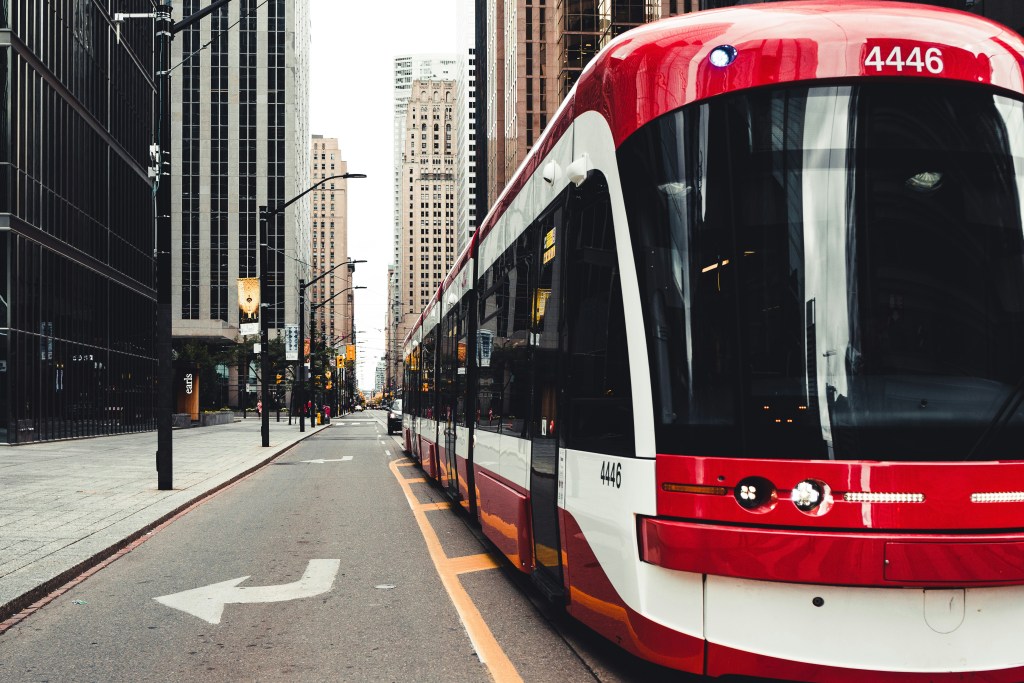
Whenever possible, choose trains and buses as your form of transportation. Obviously if you’re traveling to the other side of the globe you can’t exactly take a bus there. But once you get where you’re going try taking buses instead of cabs and trains instead of planes. The environment will thank you!
8. Make purchases mindfully
Just like at home, try to restrain yourself from buying things you don’t need. This can be especially hard on vacation where every souvenir is an opportunity to remember your travels once your back home. But remember that not all souvenir shops prioritize the environment and many trinkets aren’t even made in the country you’re visiting. So favor local artisans whenever possible and try to focus on only buying things that you know will be used regularly when you get home. My personal example of this is coffee mugs. My husband and I drink lots of coffee and tea at home we like to collect mugs as a reminder of the places we’ve traveled – they get used every day and are a fun reminder of all the places we’ve been.
9. See travel as a learning opportunity
Whether you’re traveling to a place that has a more developed infrastructure for sustainability or one that is far less developed, it can be a learning experience. If the infrastructure for environmentalism is better where you’re traveling, observe and think about ways those practices can be implemented at home. And if it’s less developed than at home, try to think about the efforts you’re making at home as ways of offsetting what happens in the rest of the world. You probably aren’t going to be influencing the sustainability practices in other countries so try not to get too discouraged by what you see. Using plastic water bottles as an example, by not consuming them here in a country where we have free access to fresh drinking water, you are offsetting the bottles that have to be consumed in places that don’t have clean water.
10. Be kind to yourself
Whatever you do, don’t be too hard on yourself. It’s hard enough to make sustainable choices at home, let alone when we’re outside of our comfort zone. The bottom line is to do your best and give yourself some grace for trying!

 Sustain-a-ville
Leave a comment