
Contrary to popular belief (and what convincing marketing tactics will tell you), going zero waste doesn’t have to cost an arm and a leg. It’s easy to get overwhelmed by all the things we think we need to buy to replace our old, wasteful versions. It is true that sometimes the eco friendly version of a product might cost more money, but it also usually lasts a lot longer, ending up being less expensive or at least cost neutral in the end.
I recently saw an ad for one of those subscription boxes – the kind that sends you a new box of products every month – and it claimed to be eco-friendly products. And all I could think was that they could not possibly be an eco-friendly company. Those kinds of subscription boxes are designed to leave you with little bottles of all kinds of things you don’t need. Now this version might be little bottle of things in glass containers and reusable jars as opposed to plastic but nonetheless creating unnecessary waste in addition to unnecessary expense. Companies trying to sell products love to try to convince us that, in order to be zero waste, we need to replace everything we own with an all new zero waste version. But that is simply not the case.
Here are 10 ways you can begin your zero waste journey today AND save money:
1. Start saving those glass jars
One of the craziest things I see when people are starting out their zero waste journey is to go out and purchase a huge pack of glass jars. Glass containers might as well be the trademark *aesthetic* for all things zero waste. The reason for this is twofold – glass is a very easily recyclable material so it’s favored in the zero waste community and it’s also sturdy and long lasting so when you buy a jar of anything sold in a glass jar, it’s an easy thing to save and reuse! This does NOT mean you need to go out and buy them. Chances are you probably already have a bunch in your glass recycling anyway (assuming you are already recycling your glass). Being eco friendly is about reusing items we already own, not purchasing a whole new “kit”.

2. DIY as much as you can
Let’s face it, the zero waste community can make some pretty freaking awesome stuff. I have seen people who make everything from all their own beauty products, candles, and dishcloths to snacks, tomato sauce, and canned goods. Putting a focus on sustainability in your life doesn’t have to mean DIYing every single thing. Honestly, there simply isn’t time for that in most of our lives. And seeing others out there making all these things can be discouraging for those of us who feel we won’t have time to live up to those standards.
This is why this section says “DIY as much as you can.” For most people, as much as you can does not mean everything. Take pride in the things you are able to make and learn how to do them well. This is still a huge step in a positive direction. Ideally, your local zero waste community will help fill in the gaps and we can trade products with other people who make the things we can’t and vice versa. But even if that’s not the case for you, you’re still doing right by the earth by cutting out some waste, even if it’s not all.
For me, the things I prioritize making are my almond milk coffee creamer, select snacks, cleaning solutions, and vegetable broth. And that’s pretty much where my DIY stops at the moment. Eventually I will try to learn some more things but for now I am happy with being able to cut out the waste that would be generated if I purchased these items in a store. I also save money on these items by not having to pay a manufacturer to make them for me and I can reuse and repurpose items I already have to further contribute to the money savings.
3. Don’t quit cold turkey
If you are just learning about all things environmentally friendly, it might be tempting to look around your home and want to immediately get rid of anything not zero waste approved. But this would actually be a very un-eco-friendly thing to do. The best way to start the transition is to use the stuff we already have all the way until the very end of its life. Use it ALL up before you replace something with an eco-conscious model.
There are tons of examples of how this could apply but let’s use razors as an example here. If you are starting to learn about how terrible plastic is for the environment and take a look around your bathroom and notice a plastic package full of disposable plastic razors, you might just want to get rid of them in favor of a new, metal safety razor. But no matter what, those plastic disposable razors are going to end up in a landfill one way or another – whether that’s now or in a few days/months/years. By letting them live our their usable life before throwing them away, you are delaying the trip to the trash. This will then also buy you some time before buying the replacement, further extending the length of time before you need to replace the replacement. The longer we can wait before buying something new the better.
Replacing as you go is also a good way to save money (that’s what this post is all about anyway!) Going zero waste should absolutely not mean a huge financial commitment. Simply swap out the old, used up version for an eco friendly model the next time you need a replacement.

4. Take it a little bit at a time
I can’t tell you how often people I know look at the zero waste efforts I’m making and say “that’s great for you but I could never do that.” And my response is always to tell people that they don’t have to take the same steps I’m taking or make the same changes. We are all different and willing to prioritize different things.
What I will say is that it’s easy to get overwhelmed when you see people who have been on their zero waste journey for years and years and think it would be too hard for you to ever get to the same level. But those people didn’t get where they are by changing their life overnight. Start small. Try bringing reusable bags with you to the grocery store and being more conscious about buying items in metal and glass containers instead of plastic. And just do that for a while! Get used to that until it’s not something you even think about any more and then add another thing to the mix. This is how long term habits are built and it much more likely to become your new way of life rather than a brief hobby. And by taking steps to make sure our zero waste habits are long lasting, we can save money because the eco friendly products we do buy – like reusable grocery bags – will continue to get used for years and years rather than thrown in the back of a closet never to be seen again.
5. Garden from seeds
Who doesn’t love free vegetables? This is one of those zero waste initiatives that does take some time and extra effort. But if you can find a way to accomplish it, will be SO worth it in the end. Growing your own vegetables is already a great way to reduce cost and waste – especially since grocery prices continue to climb. If you end up with more than you can eat, canning is a great way to make sure nothing goes to waste! Or give them away to friends and family. And, even better than just growing your own vegetables, growing them from seeds cuts out so much of the plastic waste from the containers seedlings usually come in.
If you try this zero waste tip, make sure you prioritize planting vegetables that you already eat! It can be tempting to go crazy on seed packets and end up with a bunch of wasted vegetables because you don’t cook those things regularly. Plus, if you grow things you are already eating you are more likely to actually save money since you won’t be buying that produce at the store anymore. As with anything when you’re just starting out, start small and build on your garden year after year.

6. Buy used
I talk about this a lot on this blog but thrifting and buying items used is one of the absolute best ways to save money AND be eco friendly. The one thing I will caution you on is, just because you’re buying it used doesn’t necessarily mean it’s going to be sustainable. Even when you go to a thrift store, try to make a list of the things you’re looking for so you don’t end up with a bunch of stuff that you don’t need and will end up donating again anyway – that’s how you waste money, not save it 🙂
For things other than clothes, you can also find lots of great home decor, kitchen items, and furniture at thrift store. Facebook marketplace and Poshmark are some of my other favorite online places to look for used items.
7. Reduce meat and dairy consumption
This one is huge. Let me first start by saying I will never try to convince you that you need to go full on vegan if that diet/lifestyle doesn’t appeal to you. It’s not for everyone – including me, honestly! Personally, I try to reduce my dairy consumption as much as possible but I do still eat it occasionally. I also still eat fish but have cut out all other meat. This is what I have found works best for me. Like I said before, zero waste doesn’t truly have to be ZERO waste – it’s not all or nothing. But any small changes we can each individually make can have a huge collective impact.
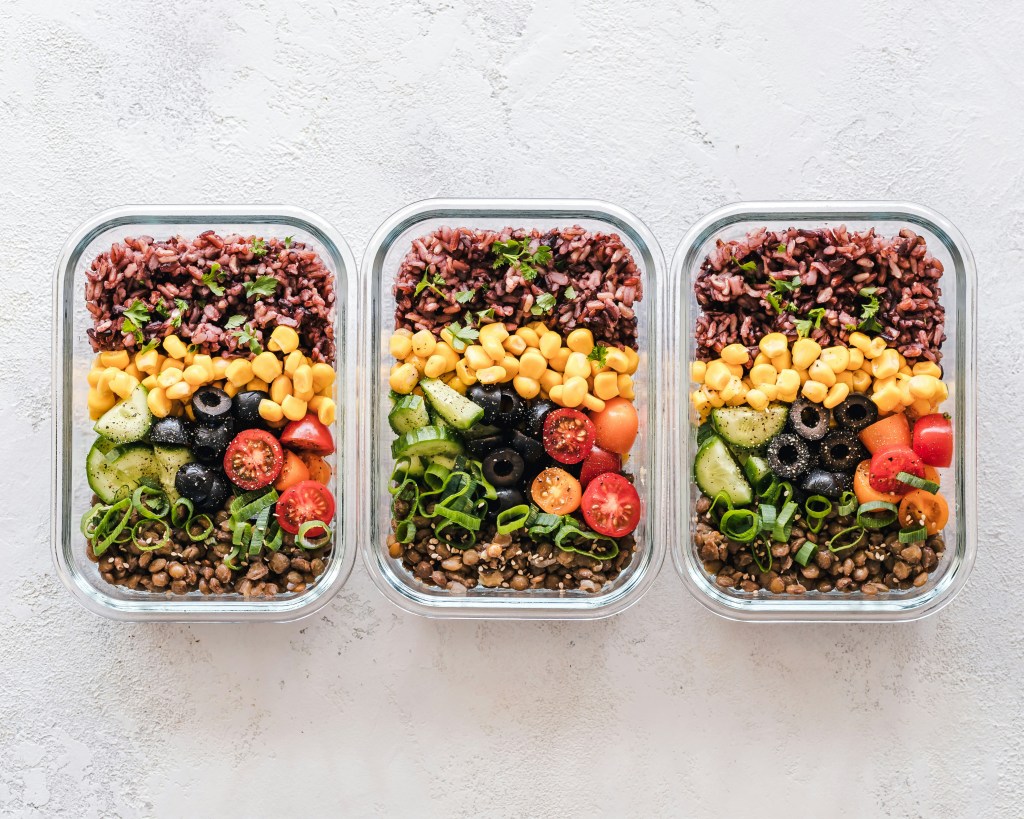
You might be asking why cutting out meat and dairy has any impact on the earth whatsoever. The truth is, the food production industry contributes 25% to the global greenhouse gas emissions and the top contributors are all products made from cows. This is because of everything from generating the mass amounts of food the livestock need to eat to the mass amounts of processing required to turn that animal into a steak we can eat.
Pretty much all mass-produced food has SOME kind of carbon footprint but the heaviest impact comes BY FAR from the meat and dairy industry. Meat and dairy also contribute greatly to our grocery bills – by at least attempting to reduce our intake of these products in favor of plant based foods we can reduce our spending at the grocery store and the impact of mass production on the earth.
8. Take shorter showers
In general, using less of anything is probably going to be a great way to be more environmentally friendly. Especially when it comes to less of our world’s precious resources. In parts of the world where we have regular access to clean drinking water, it’s easy to forget that clean water is really a very scarce and precious resource. It is true that water can be reused. After being used, some of it ends up in the oceans where is goes through the process of evaporating and coming back down as rain. And some of it ends up in water treatment facilities where all the germs and bacteria are removed to make it usable again. While this process does work for its intended purpose, it requires energy. So the less of it we use, the better. And the lower our water bill will be!
9. Less electronics -> more nature
Not only do electronics like televisions, phones, computers, gaming consoles, etc all take up energy but they are mostly made from materials that can’t be recycled. In the times we live in, it would be nearly impossible to swear them off completely (although some people still do it!) So instead of attempting to cut them out of your life in this digital world, try making an effort to use them less. The less we use them, the less kinds of electronics we will feel like we need (so we won’t be spending our hard earned money). Plus, the less electricity will be needed to keep them powered on.
I also strongly believe that more time in nature helps us remember why we attempt zero waste to begin with. By putting our phones down for even a short while and listening to the birds chirp, looking out at nature, and planting our feet in the earth, we can feel like we are actually a part of the world we live in rather than just existing near it.

10. Prioritize minimalism
Less stuff = less waste. While minimalism and sustainability aren’t exactly the same concept there are definitely things to be learned from each that help us to practice the other. Like I said in the beginning of this post, really convincing marketing tactics do a great job of making us think we need a bunch of stuff that we really could do without. Before you buy something, ask yourself if that item solves a problem you already knew you had before you saw it. Did you already know you needed a new shirt for work? Then by all means, buy the new shirt. But if it’s something you didn’t even know you wanted until you saw it, you can probably live without it. And not only that, the earth will thank you for not creating even more need for a bunch of stuff. This practice helps us save the earth AND save money.
Whatever your motivations are for attempting zero waste, know that it doesn’t have to cost you anything, except probably time. The tradeoff for choosing eco friendly options is often the lack of convenience. While there is no shortage of ways to spend money on zero waste products, it simply does not have to be an expensive new hobby. By putting into practice the tips above, we can adopt the zero waste mindset to save the earth and our wallets.

 Sustain-a-ville
Leave a comment